1. Home
  2. Services

Our services

Freight transportation services across Canada and the United States

Five services run by one Canadian carrier under USDOT 8738099, MC 99644622 and Canadian NSC NB0219320. Every one of them is quoted as a full truckload, and none of them is handed to somebody else's truck after you book.

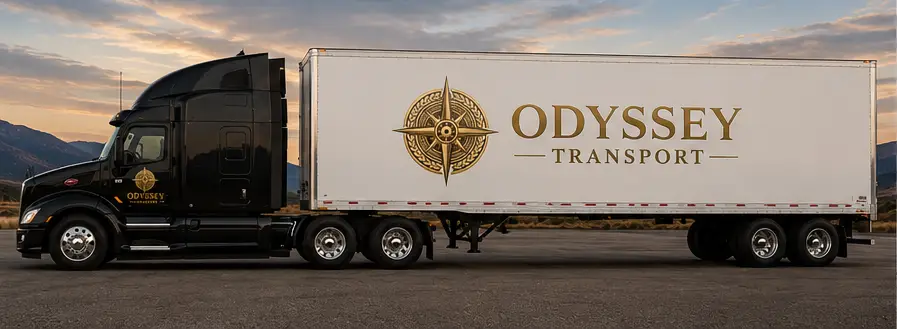
Odyssey Transport tractor and dry van trailer in side profile
  • Dry van
  • Temperature-controlled
  • Cross-border Canada ⇄ USA
  • Full truckload
  • On-time delivery

Service 01

Dry Van Freight

Most freight does not need anything more complicated than a dry van: it needs to arrive dry, with the pallet count it left on, on the day it was promised. That is what we plan the run around.

Freight is secured for the distance it is actually travelling. A load leaving New Brunswick for the American Midwest spends days on the road and crosses a border on the way, so it is loaded and restrained to arrive in the condition it left in — not just to survive the first hour.

Typical freight on this service

  • Packaged and canned food, dry goods
  • Consumer products and general merchandise
  • Building materials, fixtures and packaged hardware
  • Palletised manufacturing inputs and finished goods
  • Full truckload
  • Enclosed & secured
  • Canada & USA
Odyssey Transport tractor and dry van trailer in side profile

Service 02

Refrigerated & Temperature-Controlled

Temperature-controlled freight is unforgiving: a load that drifts a few degrees for a few hours can be rejected at the door even though it looks perfect. The set point is agreed before the trailer is loaded, and that is the number the driver runs to.

The trailer is brought down to temperature before loading rather than after, and the reefer is checked on the run, not only at the dock. If anything about the load changes on the road, you hear about it while there is still time to make a decision.

Typical freight on this service

  • Fresh produce and floral
  • Dairy, eggs and chilled protein
  • Frozen food and ice cream
  • Beverages and other temperature-sensitive packaged goods
  • Reefer
  • Set point agreed first
  • Checked on the run
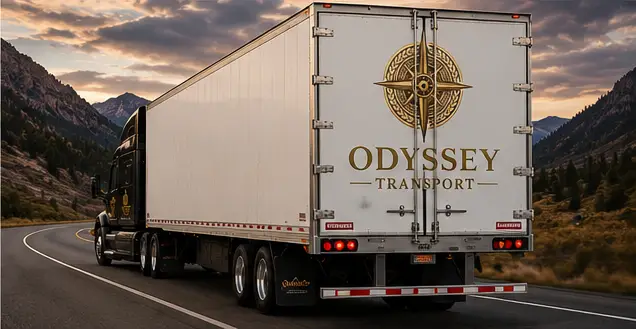
Rear doors of an Odyssey Transport trailer on a highway curve

Service 03

Cross-Border Shipping (Canada & USA)

Most border delays are paperwork delays, not traffic. The truck reaches the port of entry, the customs entry has not been filed yet, and the load sits. We send the documents ahead instead: the PAPS number going south, the PARS number coming north, both with your broker before the truck gets to the crossing.

Odyssey Transport operates under USDOT 8738099 and MC 99644622 on the American side and Canadian National Safety Code NB0219320 on ours, so a load can be quoted, booked and cleared as one movement in either direction rather than handed to a second carrier at the line. Your broker files the entry; we supply the manifest, the numbers and a driver who has crossed before.

Typical freight on this service

  • Southbound truckloads from Canadian shippers into the United States
  • Northbound truckloads from US shippers into Canada
  • Freight moving for brokers and 3PLs on either side of the line
  • Repeat lanes where a stable crossing routine matters more than a cheap rate
  • Southbound & northbound
  • PAPS / PARS ahead of arrival
  • USDOT 8738099
  • NSC NB0219320
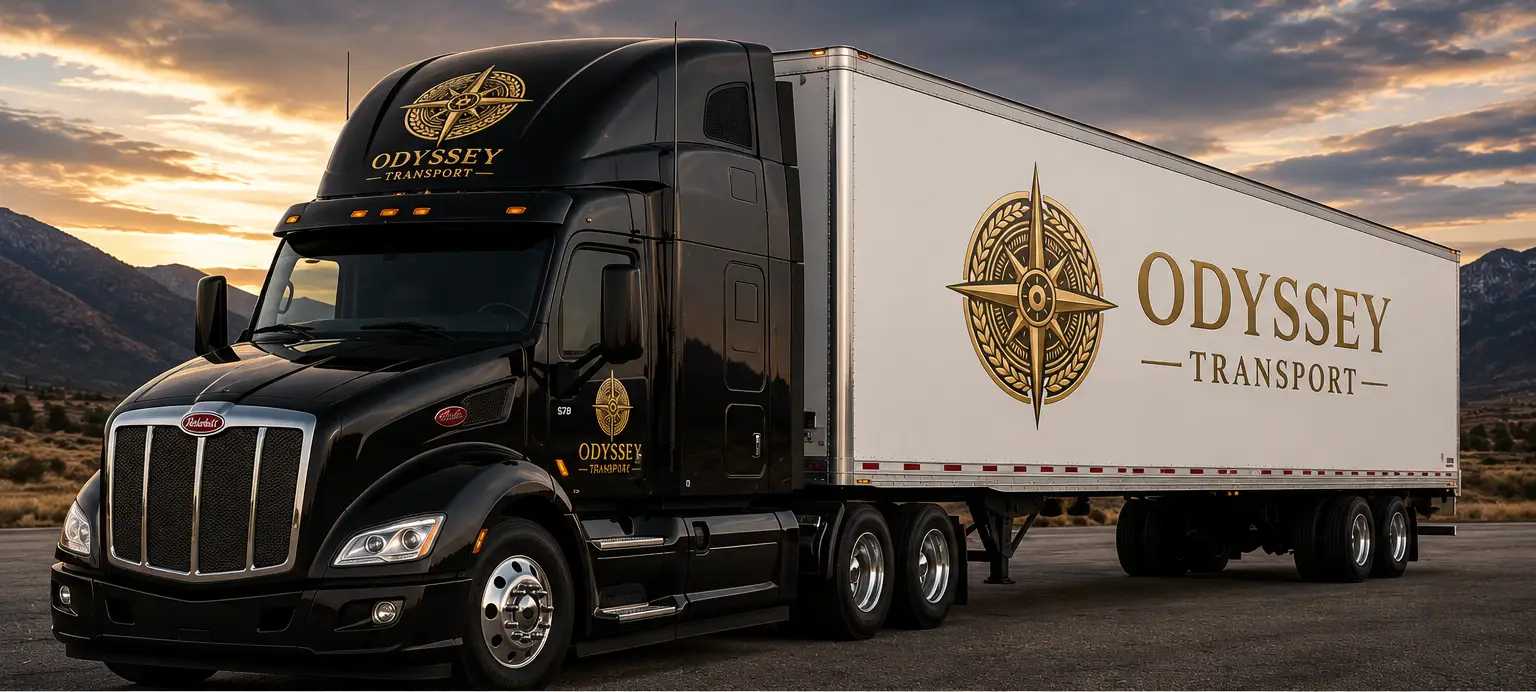
Odyssey Transport tractor and dry van trailer on a mountain highway at sunrise

Service 04

Full Truckload (FTL)

Full truckload means your freight is loaded once and unloaded once. It is not cross-docked at a terminal, it does not share a trailer with another shipper's pallets, and it does not wait at a hub for a lane in your direction to fill.

The practical difference is fewer hands on the freight — which is where most damage claims start — and a delivery window narrow enough to schedule production or a receiving crew against. Every service on this page is quoted as a full truckload.

Typical freight on this service

  • Shipments that fill or nearly fill a trailer
  • High-value or fragile freight that should not be re-handled
  • Time-critical loads with a fixed delivery appointment
  • Repeat volume on a lane you want run the same way every week
  • One trailer
  • One driver
  • No terminal handling
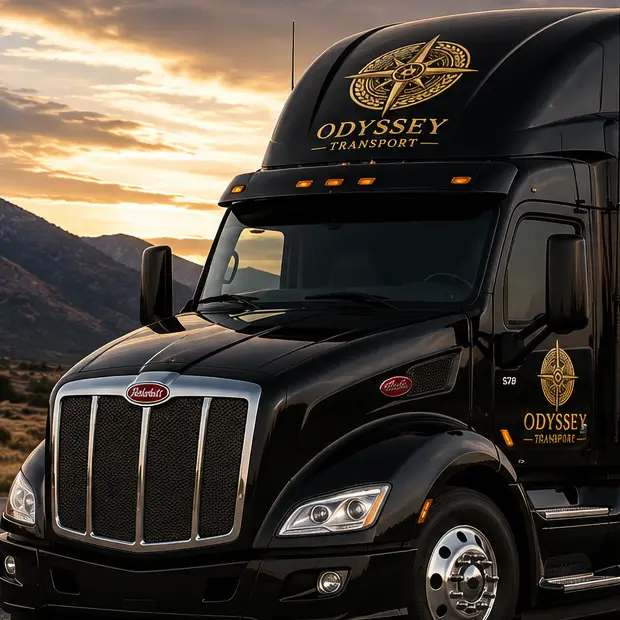
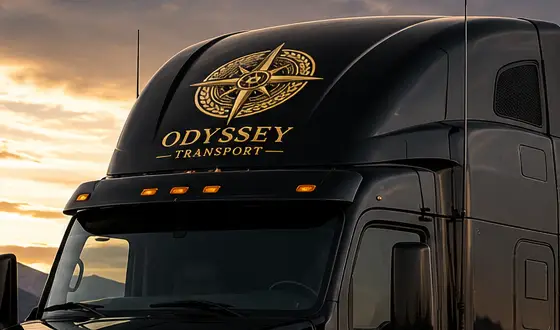
Black Odyssey Transport tractor with the gold compass emblem on the sleeper roof

Service 05

Reliable, On-Time Delivery

You get one point of contact from the moment the load is booked, check calls while it runs, and an ETA that is updated as soon as something changes — not at the appointment time.

A shipper loads three hours late, a winter storm closes a highway, a queue at the border runs long — none of that is unusual in this business. What matters is that you hear it from us first and still have time to move an appointment, warn a receiver or reschedule a crew.

When this matters most

  • Lanes with a fixed receiving appointment
  • Shippers who have to keep their own customer updated
  • Loads where proof of delivery has to follow the same day
  • Any lane where nobody should have to phone and ask where the truck is
  • Check calls
  • One point of contact
  • POD on request
Gold Odyssey Transport compass emblem on the roof fairing of a black tractor

How it runs

What actually happens between your call and the delivery


No mystery, no waiting to find out where your freight is. Six steps, the same on every load — from the quote request to proof of delivery.

  1. You send the lane

    Pickup and delivery points, ready date, weight, what you are shipping — and the set point if it is temperature-controlled.

  2. We quote it

    A rate from someone who can actually commit the equipment, not a placeholder number that changes when the truck is needed.

  3. Booking confirmed

    You get the confirmation, the equipment assigned to your load, and one name to call about it from here on.

  4. Border paperwork goes first

    On cross-border loads the PAPS or PARS number reaches your broker before the tractor reaches the port of entry.

  5. Check calls on the road

    You hear from us while the load runs, and you hear about a delay from us rather than from your own customer.

  6. Delivered, POD on request

    The load is delivered inside the window, and proof of delivery follows whenever you need it.

Equipment & authority

The numbers on the unit


Everything a shipper or broker usually has to phone in and ask for, in one place — the same figures our drivers run to and our terminals quote from.

DetailValue
Operating authority (USDOT)8738099
Motor carrier number (MC)99644622
National Safety Code (NSC)NB0219320
EquipmentDry van & temperature-controlled trailers
Service typeFull truckload (FTL)
Tare weight8,476 kg (18,686 lb)
Rated gross vehicle weight (Canada)41,500 kg (91,492 lb)
Rated payload (GVW − tare)33,024 kg (72,805 lb)
US gross weight limit80,000 lb (36,287 kg)
TerminalsDieppe, NB · Calgary, AB

Weights are as placarded on the unit. The Canadian rating is what the equipment is built to; a load running into the United States is planned to the US federal limit of 80,000 lb gross instead. Tare varies with the trailer and the fuel on board, so confirm the exact available payload for your lane when you book.

Not sure which service fits? Describe the freight and the lane on the quote form or call Dieppe, NB on (506) 380-8511. If a dry van is the wrong answer we will say so — including when the honest answer is that another carrier is a better fit.

Questions

Questions about our freight services

What is the difference between a dry van and a temperature-controlled trailer?

A dry van is an enclosed, unheated and uncooled box: it keeps freight dry, secure and out of sight, and suits anything that tolerates ambient temperature. A temperature-controlled (reefer) trailer adds a refrigeration unit that holds an agreed set point for the whole trip, which is what perishable and frozen freight needs.

Who handles the customs paperwork on a cross-border load?

Your customs broker files the entry — that relationship stays yours. Our job is everything the truck carries and everything that has to reach the broker first: the manifest, the commercial invoice from your paperwork, and the PAPS number going south or PARS number coming north, sent ahead of arrival rather than at the booth.

What does full truckload actually mean for my freight?

Your shipment is loaded once and unloaded once, in a trailer carrying nothing else. There is no cross-docking at a hub, no consolidation with other pallets, and no second carrier taking over partway. Fewer hands on the freight is the single biggest reduction in damage claims available to a shipper.

Do you provide proof of delivery?

Yes — proof of delivery is available on request after the load is delivered. Tell us at booking if you need it to follow the same day and we will make sure it does.

How far ahead do I need to book a truck?

There is no fixed cut-off. The earlier a lane reaches us the more likely the right trailer is free for it, but short-notice loads are worth asking about — we would rather look and tell you honestly than have you assume the answer is no.

Ready to put a load on one of these lanes?

Send the pickup, the delivery and the date. We will tell you quickly whether the trailer is free and what it costs.